
Blender Batch Render Manager: The Complete Add-on
The complete Blender Batch Render Manager Python add-on — all files assembled, cross-version tested, and ready to install. Plus a series retrospective on what we learned.
Blender Add-on Error Handling, Queue Resume, and Packaging for Distribution
Learn how to add error handling, pre-flight validation, queue resume on startup, and package your Blender Python add-on as a legacy zip and Extensions format.
Blender Add-on Preferences, File I/O, and Notifications with Python
Learn how to add AddonPreferences to a Blender Python add-on, persist queue data as JSON, and send email and Discord notifications on render completion.
Keeping Blender Responsive: Non-Blocking Renders with bpy.app.timers
Learn how to use bpy.app.timers in Blender Python add-ons to poll background subprocesses and keep the UI responsive during long-running tasks.
Blender Add-on Scene Data and Subprocess Rendering with Python
Learn how to use bpy.data to read scene data and run Blender as a subprocess with --python-expr to inject per-job render overrides in your Python add-on.
Blender Add-on Properties: Building a Data Model with Python
Learn how to define PropertyGroup data models in Blender Python add-ons — bpy.props, CollectionProperty, EnumProperty, and wiring a UIList to real data.
Blender Add-on Panels: Building a UI with Python
Learn how to build Blender add-on panels in Python — N-panel sidebar, UIList widgets, toolbar buttons, and sub-panels with real code examples.
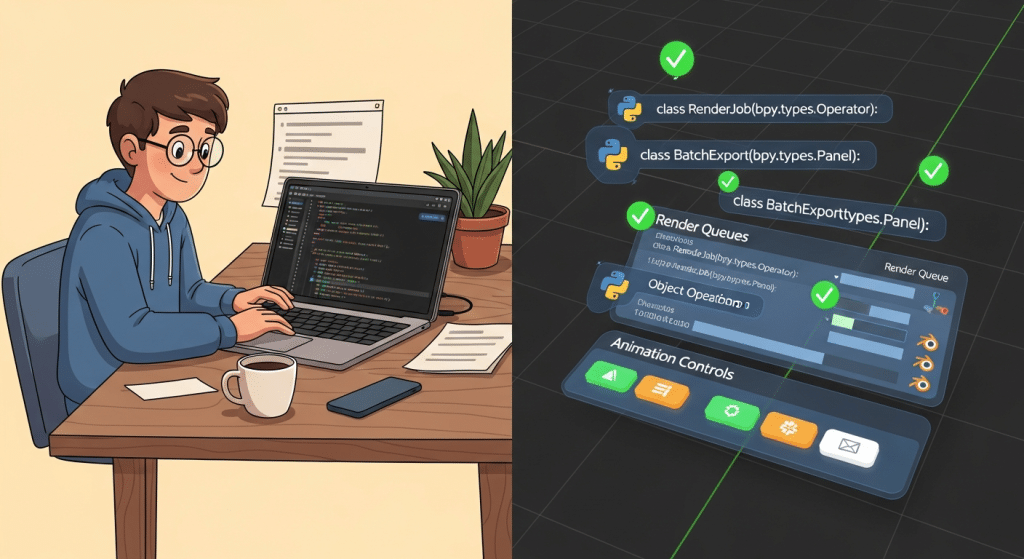
Blender Operators: Teaching Your Python Add-on What It Can Do
Learn how to build Blender operators in Python — covering bl_options, poll(), invoke(), and report() with a real add-on example.
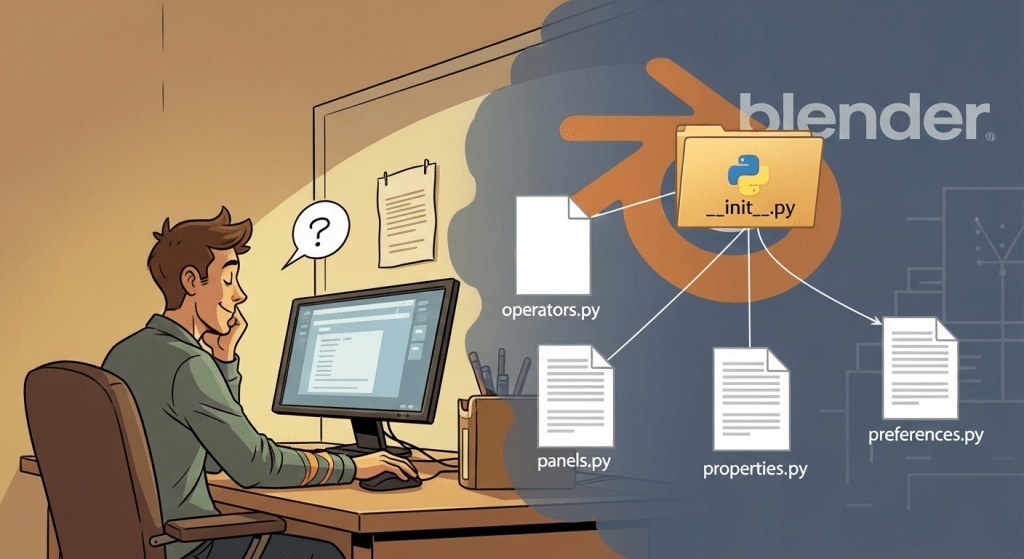
From One File to a Real Package: Structuring Your Blender Add-on
Learn how to convert a single-file Blender add-on into a proper Python package — with clean imports, modular files, and a registration system that scales.
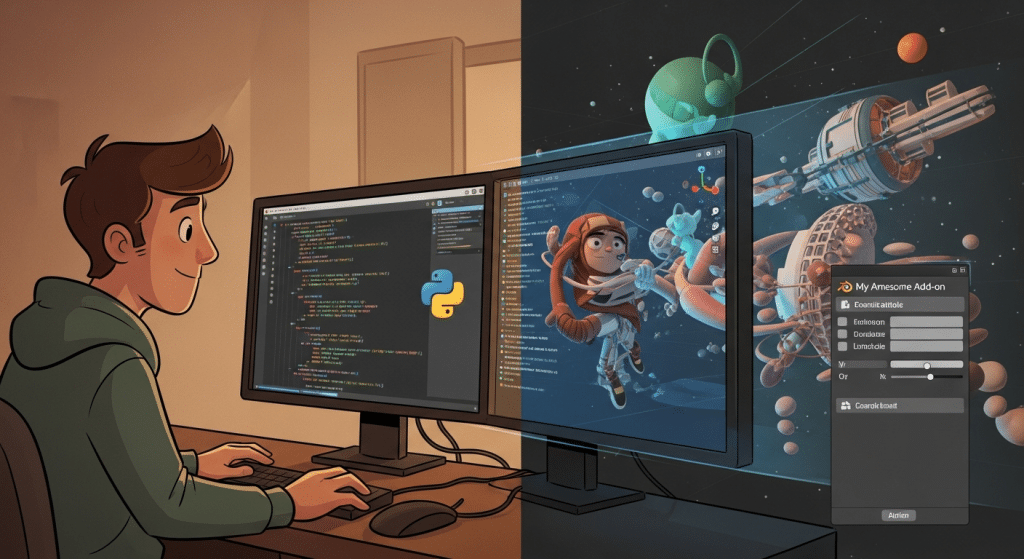
Building Your First Blender Add-on with Python
Learn to build your first Blender add-on with Python from scratch. Part 1 of a 10-post series where we build a real Batch Render Manager together.